Nong Bua Lamphu History

Early Nong Bua Lamphu area was inhabited by Mon, Khmer and early Tai-Lao peoples. Archaeological evidence suggests settlement for many centuries.
1354 to 1707 Kingdom of Lan Xang
The area became part of the powerful Lao kingdom of Lan Xang, founded by Fa Ngum. Nong Bua Lamphu was an important regional town and was traditionally governed by members of the royal family.
Mid 1500s King Naresuan's connection
Around 1574, forces under Naresuan and his father Maha Thammaracha campaigned towards Vientiane during conflicts involving Lan Xang and Burma. Nong Bua Lamphu is believed to have been used as a staging area.
1590s
King Naresuan is said to have learned of developments in the Lao-Burmese conflict while in the Nong Bua Lamphu area, which is why he is commemorated locally.
Late 1700s Phra Wo and Phra Ta
Phra Wo and Phra Ta are revered as the founders and restorers of Nong Bua Lamphu. The legend of the twin sisters is believed to date from the late eighteenth century.
According to local tradition, Kham Si and Kham Sai were the twin nieces of Phra Wo and Phra Ta. They were entrusted with guarding a sacred giant gong brought from Vientiane, a treasured object that has since become one of Nong Bua Lamphu's most enduring legends and intriguing mysteries.
1826 to 1828 Lao Rebellion
Anouvong rebelled against Siam. The rebellion failed, and much of the Vientiane kingdom was devastated. Nong Bua Lamphu was affected by these regional upheavals.
1975 to 1976
The modern shrine honouring Phra Wo and Phra Ta was constructed.
Today
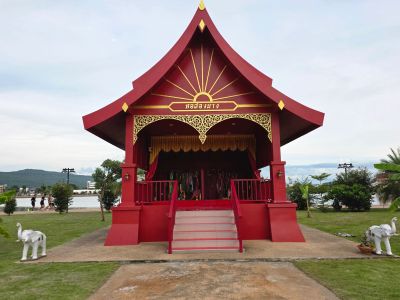
The pavilion known as Horsongnang commemorates Kham Si and Kham Sai and preserves the memory of the giant Vientiane gong.
Two Sisters & the legend of the lost gong of Nongbua Lamphu
1778
The armies of Siam marched upon Vientiane.
Among the treasures removed from the city was a magnificent bronze gong, cast generations earlier by master craftsmen of Lan Xang. It measured nearly two metres across and required twelve men to carry it suspended from a teak frame.
The gong was said to possess a voice unlike any other.
When struck at dawn, its deep note could be heard for several kilometres and was believed to bring prosperity to the people and protection to the city. To prevent it falling into enemy hands, the gong was entrusted to the family of Phra Wo and Phra Ta at Nong Bua, revered as the founders and restorers of Nong Bua Lamphu.
1780
The gong arrived at Nong Bua under cover of darkness.
It was placed in a small pavilion beside the lotus marsh, where two young twin sisters, Kham Si and Kham Sai, pledged to guard it. Every full moon they polished the bronze with tamarind leaves and lit candles around its wooden frame. Villagers believed the sound of the gong calmed storms and guided lost travellers home.
1827
War once again swept across the Lao kingdoms.
As soldiers approached Nong Bua, the sisters feared the sacred gong would be taken away forever. Legend says they summoned trusted villagers and, under the cover of a moonless night, transported the gong to the centre of the swamp.
There, beneath a raft of lotus leaves, they lowered the great bronze disc into the mud and water.
Before dawn, the sisters vanished. Some say they escaped into the Phu Phan Mountains.
Some believe they drowned protecting the gong. Others insist they became guardian spirits watching over Nong Bua to this day.
2027 Two Hundred Years Later
Two centuries have passed since the gong was hidden.
Old fishermen still tell stories of hearing a deep metallic hum drifting across the lake before sunrise.
Children feed and catch the fish while watching the sunset over the lake, unaware that somewhere beneath the waters may rest the lost giant Gong of Vientiane.
Perhaps one day, when Nong Bua celebrates the memory of Kham Si and Kham Sai, divers and historians will search the lake. And perhaps, after two hundred years of silence, the great gong will sound once more.
Sisters Kham Si and Kham Sai